Friday, 16 June 2017


The history of Chittor is one of the most stirring chapters in Indian history for it was there that the flower of Rajput chivalry sprang to life and the immense stretch of its sacred walls and ruined palaces relate the saga of innumerable sieges and heroism which has almost become a myth now.
Chittorgarh was one of the most fiercely contested seats of power in India. With its formidable fortifications, Bappa Rawal, the legendary founder of the Sisodia dynasty, received Chittor in the middle of the eighth century, as part of the last Solanki princess's dowry. It crowns a seven-mile- long hill, covering 700 acres (280 hectares), with its fortifications, temples, towers and palaces.
From the eighth to the 16th century, Bappa Rawal's descendants ruled over an important kingdom called Mewar stretching from Gujarat to Ajmer. But during these eight centuries the seemingly impregnable Chittor was surrounded, overrun, and sacked three times.
In 1303 Allauddin khilji, Sultan of Delhi, intrigued by tales of the matchless beauty of Padmini, Rani of Chittor, of her wit and charm, decided to verify this himself. His armies surrounded Chittor, and the sultan sent a message to Rana Rattan Singh, Padmini's husband, to say that he would spare the city if he could meet its famous queen. The compromise finally reached was that the sultan could look upon Padmini's reflection if he came unarmed into the fort. Accordingly, the sultan went up the hill and glimpsed a reflection of the beautiful Padmini standing by a lotus pool. He thanked his host who courteously escorted Allauddin down to the outer gate-where the sultan's men waited in ambush to take the rana hostage.
There was consternation in Chittor until Padmini devised a plan. A messenger informed the sultan that the rani would come to him. Dozens of curtained palanquins set off down the hill, each carried by six humble bearers. Once inside the Sultan's camp, four well-armed Rajput warriors leaped out of each palanquin and each lowly palanquin bearer drew a sword.In the ensuing battle, Rana Rattan Singh was rescued-but 7,000 Rajput warriors died. The sultan now attacked Chittor with renewed vigor. Having lost 7,000 of its best warriors, Chittor could not hold out. Surrender was unthinkable. The rani and her entire entourage of women, the wives of generals and soldiers, sent their children into hiding with loyal retainers. They then dressed their wedding fine , slid their farewells, and singing ancient hymns, boldly entered the mahal and performed jauhar.
The men, watching with expressionless faces, then donned saffron robes, smeared the holy ashes of their women on their foreheads, flung open the gates of the fort and thundered down the hill into the enemy ranks, to fight to the death.The second sack or shake (sacrifice) of Chittor, by which Rajputs still swear when pledging their word, occurred in 1535, when Sultan Bahadur Shan Of Gujarat attacked the fort.
Rana Kumbha
Rana Kumbha

Rana Kumbha

Rana Kumbha (1433-68) was a versatile man a brilliant, poet and musician. He built mewar upto a position of assailable military strength building a chain of thirty forts that girdled the kingdom But, perhaps more important was a patron of the arts to rival Lorenzo de Medici, and he made Chittorgarh a dazzling cultural center whose fame spread right across Hindustan.


Rana Sanga
Rana Sanga

Rana Sanga

Rana Sanga (reigned 1509-27) was a warrior and a man of great chivalry and honor reign was marked by a series of continual battles, in course of which he is said to have lost one arm and had been crippled in one leg and received eighty-four wounds on his body. The last of his battles was again Mughal invader, Babur, in 1527. Deserted by one ofgenerals, Rana Sanga was wounded in the battle and shortly after.


Maharana Pratap
Maharana Pratap

Maharana Pratap

Over the next half-century, most other Rajput rulers allowed themselves to be wooed the Mughals; Mewar alone held out. In 1567 Emperor Akbar decided to teach it a lesson: he attacked Chittorgarh razed it to the ground. Five years later Maharana Pratap (reigned 1572-97) came to rule Mewar - a king without a capital. He continued to defy Akbar, and in 1576, confronted the imperial armies at Haldighati.
The battle ended in a stalemate and Maharana Pratap and his followers withdrew to the craggy hills of Mewar, from where they continued to harrass the Mughals through guerilla warfare for the next twenty years. Maharana Pratap made his descendants vow that they would not sleep on beds, nor live in palaces, nor eat off metal utensils, until Chittorgarh had been regained.In fact, right into the 20th century the maharanas of Mewar continued to place a leaf platter under their regular utensils and a reed mat under their beds in symbolic continuance of this vow.


Rani Padmini
Rani Padmini

Rani Padmini

In 1303 Allauddin khilji, Sultan of Delhi, intrigued by tales of the matchless beauty of Padmini, Rani of Chittor, of her wit and charm, decided to verify this himself. His armies surrounded Chittor, and the sultan sent a message to Rana Rattan Singh, Padmini's husband, to say that he would spare the city if he could meet its famous queen. The compromise finally reached was that the sultan could look upon Padmini's reflection if he came unarmed into the fort. Accordingly, the sultan went up the hill and glimpsed a reflection of the beautiful Padmini standing by a lotus pool. He thanked his host who courteously escorted Allauddin down to the outer gate-where the sultan's men waited in ambush to take the rana hostage.
 AMAZON.INThere was consternation in Chittor until Padmini devised a plan. A messenger informed the sultan that the rani would come to him. Dozens of curtained palanquins set off down the hill, each carried by six humble bearers. Once inside the Sultan's camp, four well-armed Rajput warriors leaped out of each palanquin and each lowly palanquin bearer drew a sword.In the ensuing battle, Rana Rattan Singh was rescued-but 7,000 Rajput warriors died. The sultan now attacked Chittor with renewed vigor. Having lost 7,000 of its best warriors, Chittor could not hold out. Surrender was unthinkable. The rani and her entire entourage of women, the wives of generals and soldiers, sent their children into hiding with loyal retainers. They then dressed their wedding fine , slid their farewells, and singing ancient hymns, boldly entered the mahal and performed jauhar.

Chittorgarh And Jainism

Chittorgarh is ancient center of Jain tradition. Here are few facts about Chittor:
  1. Chittor is adjacent to the ancient city of Madhyamika. The Jain inscriptions at Mathura from the Kushana period (1-3rd cent) mention a "Majjhimilla" branch of the "Kottiya" gana, indicating that it was a major Jain center.
  2. The famous Acharya Haribhadra Suri (6th cent) was born in Chittor and wrote "Dhurtopakhyana" there.
  3. There was a scholar Elacharya at Chittor from whom Vira-senacharya (9th cent) learned the ancient Shat-khandagama and Kashayapahuda. Vira-senacharya later the famous "Dhavala" and "Jayadhavala" on the basis of these books.
  4. Chittor was the residence of Jinavallabha who propagated the Vidhimarga in the 12th cent. In the 15-17th century, it was the seat of a Bhattaraka.

WHY VISIT CHITTORGARH ?

Chittorgarh, also called Chittaur, from the 7th century to the 16th, was the capital of Mewar under the Rajputs. Chittaur evokes memories of great heroism and sacrifice by Rajput men and women in the intermittent battles that they had to fight against invaders from Northwest or Delhi. Chittaur witnessed both the ravages of war and the triumphs of the spirit. Allaudin Khilji who coveted Queen Padmini of Chittaur, invaded the city in 1303 A.D. Queen Padmini and the women of the court sacrificed themselves in a pyre of fire rather than submit to anybody. This supreme sacrifice has been called 'Jauhar' and epitomises the fiery spirit of the Rajputs of the day. The city stands strewn with monuments and battlements as evidence of the blood and gore that it went through in medieval times.
Chittorgarh Fort
The Chittaur Fort is the best known fort in Rajasthan. Its origins are traced to the Pandavas of Mahabharata. It is said that Bhima, one of the Pandava brothers, built the fort. Standing on 180 meters high hill, the fort covers an area of 700 Acres. Inside it is the Meera and Khumba Shyam Temple. It is associated with Meera, a mystic poetess devoted to Lord Krishna whose life and bhajans have become part of the folklore and literary traditions of the region and several parts of India.

Fort Of Chittorgarh

Fort Of Chittorgarh
Chittorgarh (Chittaurgarh) is the epitome of Rajput pride, romance and spirit. It reverberates with history of heroism and sacrifice, which is evident as it echoes with the tales sung by the Bards of Rajasthan. The main reason for visiting Chittorgarh is its massive hilltop fort, which is a depiction of Rajput culture and values.
The fort of Chittor is regarded as one of the most outstanding forts of the country and is indeed the "Pride of Rajasthan State". The formidable fort is perched atop a 180 meter high hillock covering a massive area of 700 acres and is a standing sentinel to the courage and valour of Chittorgarh. It is belived that the fort was build by the Mauryans in 7th century and further strucres were added to it by the successive Mewar rulers.
The one mile long serpentine road to the fort is quite steep and exhastive. The fort is approached through seven huge gateways or 'pols', which are guarded by watch tower and massive iron spiked doors.
Water Fort :
Chittorgarh fort is also called as Water Fort. The fort had 84 water bodies, out of which only about 22 exist today. These Include talabs (ponds), kunds (wells), and baories (stepwells). All the talabs have a natural catchment. The kunds and baories are located below the talabs, so that even the seepage from the latter is not lost.
The fort spreads over 700 hectares, 40 per cent of which are given over to water bodies. The average reservoir depth is about 2 m. Taken together, this means these reservoirs can store about 4 billion litres of water.
In a year of more than normal rainfall (average annual rainfall: 700 mm), enough water would be stored to last the next 12 months. Even after water loss due to seepage and evaporation and other causes, an army of 50,000 could live in the fort for four years without fear of thirst.

Tower of Victory - (Vijay Stambh)

Tower Of Victory
Built in 1440 AD by Maharana Kumbha to commemorate his victory over Mohamed Khilji this 9-storyed tower is adorned by sculptures of Hindu deities around.
There are around 157 narrow steps leading to the terrace where the balconies give a beautiful top angle view of the whole town. When illuminated in the evening, the tower reflects a mesmerizing effect and the view is worth capturing in the camera.

Tower of Fame - (Kirti Stambh)

Tower Of Fame
Dedicated to Adinathji the 1st Jain Teerthankar adorned by the naked figures of the Digambars [Adherents of the Digambar sect who does not believe in covering the natural body] A narrow stairway goes through seven stories of the tower to the top.The 22 metres high tower was build by a wealthy jain merchant in the 12th century A.D.

Gaumukh Reservoir

Gaumukh Reservoir
A deep tank filled by a spring coming from a 'cow mouth', situated at the edge of the cliff. It is considered to be sacred where you can feed the fishes.


Rana Kumbha Palace

Rana Kumbha Palace
The ruined edifice of great historical and architectural interest, being the most massive monument in the fort of Chittaur. The palace is believed to have underground cellars where Rani Padmini and other women committed Jauhar.

Padmini Palace

Padmini Palace
The palace, once the scene of an incident directly responsible for the bettle between Allauddin Khiliji and Rana Ratan Singh, is a distinctly feminine structure that overlooks a pleasant pool.

Meera Temple (Meera Mandir)

Meera Temple
Build by Maharana Kumbha in 1449, this lord Vishnu Temple has beautiful idols in its sanctum, mendap and pillars. In the same premises, there is a small temple of Lord Krishhna.


Kalika Mata Temple (Kalikamata Mandir)

Kalika Mata Temple
This mother goddess temple was build originally in the 8th century as the Surya or Sun temple and converted to its present form in the 14th century.


Fateh Prakash Palace - (Government Museum)

Fateh Prakash Palace
Build by Maharana Fateh Singh this huge palace is of morden style. This place has been named Fateh Prakesh after Maharana Fateh Singh. There is a big Ganesh idol, a fountain, and different frescoes which are to be seen to be believed.
This palace, now a museum, has a rich collection of sculptures from temples and buildings in the Fort.

Jain Temples (Jain Mandir - Sattavish devri)

Jain Temple
At present six jain temples on the fort of Chittor. The largest and chief among them is the temple of Bhagawan Adinatha with fifty-two devkulikas. The place of this temple is known as 'Sattavish devri'. It means that at some time in the past, there were twenty-seven temples here.
The Digamabar Jain Kirtistambh and seven-storied Kirtistambh are two among them. The seven-storied Kirtistambh was built in the fourteenth century in memories of Bhagawan Adinatha.

Seven Gates of the Fort

Seven Gates of the Fort
To enter in to the Fort Of Chittorgarh, the person has to go through seven huge gates(Pol). Each gate is different in its name, design and its size. Below is the list of these gates:
  1. Padan Pol
  2. Bhairon Pol
  3. Hanuman Pol
  4. Jorla Pol
  5. Ganesh Pol
  6. Laxman Pol
  7. Ram Pol

Tuesday, 13 June 2017

Why is India an unique country in the world?

Namaste

Lets start with the culture,

When you hear about the country India, you think of one of the oldest cultures and traditions in the world isn't it? And yes that's true. It is the oldest culture.And this is based on the religion present in India.
India was one of the richest countries in the world during the reign of kings and Queens.It had temples made out of Gold.The fields of different spices and vegetables were really vast. And many years later, now it still is the world's biggest source of rice and vegetation. Sanskrit originated in India.The corpus of Sanskrit literature encompasses a rich tradition of poetry and drama as well as scientific, technical, philosophical and dharma texts. Sanskrit continues to be widely used as a ceremonial language in Hindu religious rituals and Buddhist practice in the forms of hymns and mantras.
India has 28 states and each state is different.Each state has their own language, dressing,food and more.Different coloured people and different religion people live
in India too.India has 18 languages and 1600 minor languages and dialects.Though the majority in India is Hinduism ,Islam is practised by around 13% of all Indians.The
country had over 23 million Christians, over 19 million Sikhs, about 8 million Buddhists and about 4 million Jains.And therefore different festivals too are celebrated
in India. And the best part is even though theres a mixture of different people, Indians still live together peacefully and celebrate festivals together.They even don't
care about what colour or religion you are.Bharatnatyam is the official dance of India .This dance is very popular in India. The musical instruments in India are very classical like the harmonium ,flute ,tabla etc.

Bharatnatyam

Lets talk about the weddings...

Indian weddings are very filled with ritual and celebration that continue for several days.Generally anywhere between 100 to 10,000 people attend. Often, many of the attendees are unknown to the bride and groom themselves. Though most Indian marriages are arranged,Some couples in urban areas consummate "love marriages", in which the partners decide to marry each other without family involvement or assistance. The traditional Indian wedding is about two families being brought together socially, with as much emphasis placed on the families coming closer as the married couple.

And now for their religion,

The religion of 80% of the people in India is Hinduism.The people in India wear their clothing depending on their caste and state.For example in Kerala the men wear Lungi and women wear Sari.A 'bindi' on a woman's forehead or a 'tilak' on a man's forehead,The women wear a red bindi on the forehead to signify 'marriage', The black bindi on the forehead of a widow signify s her loss.While young girls can wear any colored bindi to indicate their spiritual eye( The Third Eye).Some women in India, also think that their bindi is linked to their husbands' prosperity. They wear bigger and bigger bindis, which they believe will bring good luck to their husbands and thus to their entire family. Some women also link the bindi on their forehead to the life of their husbands. They believe the bindi will protect their husbands from all disasters and hence give them longer life.Hinduism teaches non -violence and respect to all living things.Therefore India is the largest country to practice vegetarianism.The cow is revered as the source of food and symbol of life and may never be killed.Because it is a symbol of wealth, strength and full Earthly life.Every part of a cow is very useful, from ploughing the field to its dung and so it is very much respected in India.However, many non-Hindus interpret these beliefs to mean that Hindus worship cows. This is not true. It is more accurate to say the cow is taboo in the Hindu religion, rather than sacred. This is just one example of the misunderstandings people have about the Hindu faith.It is also considered wrong to consume beef or kill a cow for food.Besides cow, A snake, mostly a Cobra is considered Holy because it eats all the rats in the fields and makes it better for the farmers.

Hindu Goddess Laxmi

What about the Seasons and Animals?

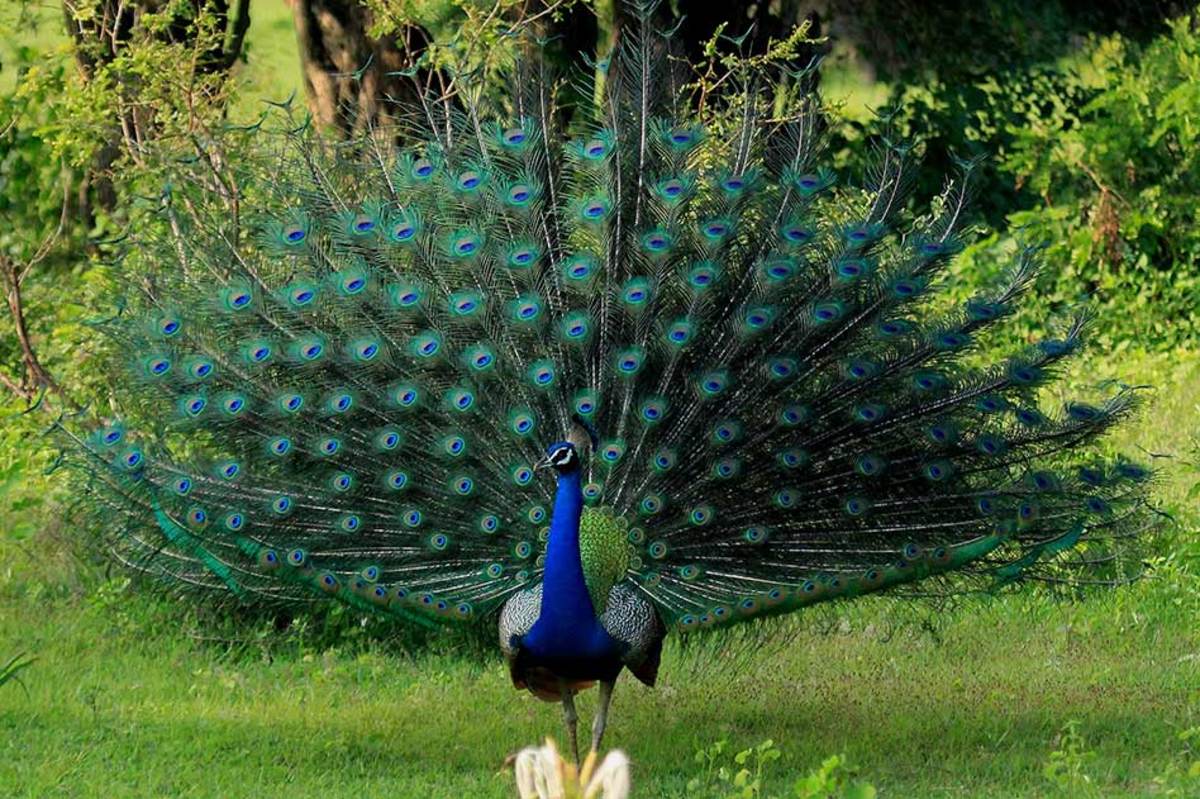
India experiences rain from October to November, winter from November to February and the rest is, you know -Indian summer.The north region has snow because it is located in the Himalayas.The Tiger is the national animal and the Peacock is the national bird.To see the Peacock dance in the rain is a beautiful sight.Other animals existing in India are Elephants,Monkeys, Deer, Bear , Cheetah , Rhinoceros and a lot more.

Indian Peacock

The Best Landmarks of India

Each state in India has a landmark and a spot to boast about.
Like the Golden Temple Amritsar India (Sri Harimandir Sahib Amritsar) is not only a central religious place of the Sikhs, but also a symbol of human brotherhood and equality. Everybody, irrespective of cast, creed or race can seek spiritual solace and religious fulfillment without any hindrance.

The Golden Temple

.Even Goa ,which is known for its beaches has more to it like Tambdi surla which means"red mud" that you see on the way to Mahadev Temple, Tambdi Surla is a 12th-century Shaivite temple of the Lord Mahadeva and an active place of Hindu worship. It is notable as the oldest temple in Goa, India. Tambdi surla means the "red mud" that you find on the way to it.On the way you have to walk through a lake to get to it.The best time to go there is the rainy season.

The Lake To Cross To Go To Tambdi Surla

Tambdi Surla

How can one forget about one of the seven wonders of the world that is located in India? The Taj Mahal located in Agra, Delhi was built by Shah Jahan for his beloved wife Mumtaz Mahal.who was then buried in the Taj Mahal and even Shah Jahan himself asked to be buried next to his wife's coffin after his death.Taj Mahal is a pure symbol of love.

The Taj Mahal

Even the famous Pink City in Jaipur,Rajasthan is known for its beauty.The floating mosque located in Udaipur is also a beautiful to see and a lot more sights to see in India

The Floating Mosque Of Udaipur

..........Hungry?

I'm pretty sure you love the Indian food!The Indian food is known for being spicy yet delicious.North indian food is less spicy compared to the South.As i before, Indians differ from one another: religion, region,state ,caste and language.Each of these groups have their own unique cuisine.Therefore India has no national dish or cuisine till today.Rice is the staple food of India.It is different from Chinese and Japanese rice.The most popular rice is the Basmati rice.Gharam Masala and Spices are a must in Indian food.Chicken tikka masala ,Butter Chicken,Tandoori chicken,biryani,paneer palak,roti,masala dosa are verytasty and famous at the same time.The street food like batatwadas and samosas,bhel puri,pani puri and other snaks from the indian chat are worth the pay

The Traditional Indian Thali

Indian Sweets

Festival Fever

My favorite festival is the Holi festival.Because its all about color, music,dance,food,sweets and fun.The foods at the festivals are something to die for.and the sweets are the meaning of a dessert!Ganesh Chaturti is for the Lord Ganesh while Diwali is a festival of lights where people light up lanterns in their homes.And a festival Named Nag Panchami is especially for the snake where they feed it milk.

Holi, Festival Of Colors

Ganesh Chaturti

Diwali, A Festival Of Lights.


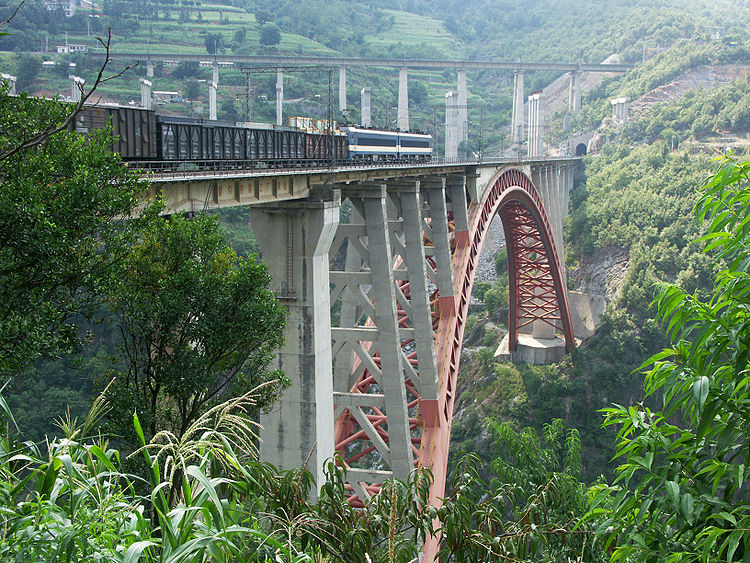
Chenab Bridge

The Chenab Bridge is a railway steel and concrete arch bridge under construction between Bakkal and Kauri in the 
href="https://en.wikipedia.org/wiki/Reasi" style="background: none rgb(255, 255, 255); color: #0b0080; font-size: 14px; text-decoration-line: none;" title="Reasi">Reasi district of Jammu and Kashmir in India. When finished, the bridge will span the Chenab River at a height of 359 m (1,178 ft) above the river, making it the world's highest rail bridge. The bridge is scheduled to open in 2019.

Introduction and topography
Chenab Bridge construction
Konkan Railways has undertaken the mega-project of constructing a new railway line across the Indian state of Jammu and Kashmirbetween the towns of Udhampur near Jammu and Baramulla on the northwestern edge of the Kashmir Valley. This project has been declared a national project in 2002. It is directed by the Konkan Railway Corporation Ltd..
The extraordinary challenge lies in a large number of tunnels (totalling 63 km in length) and bridges (7.5 km) to be implemented in highly rugged and mountainous terrain, with the difficult Himalayan geology. The most difficult part is believed to be the crossing of the deep gorge of the Chenab River, near Salal Hydro Power Dam, by the Chenab Bridge.
Another, smaller, arch bridge proposed in the new railway line was 657 m (2,156 ft) long, 189 m (620 ft) high Anji Khad Bridgebetween Katra and Reasi over the Raavi river. This proposal has been abandoned by the railways due to the specific geology of the location and a cable-stayed bridge is proposed.

Design
After many deliberations, taking into account aesthetics, economy, and availability of local expertise and construction materials, the Chenab Bridge was designed as a large span single arch steel bridge with approach viaducts on either side. The arch is two-ribbed, fabricated from large steel trusses. The chords of the trusses are sealed steel boxes, internally stiffened and filled with concrete to assist in controlling wind-induced forces on the bridge. Another advantage of concrete filling is that internal painting will not be required.
The number of bearings has been minimized, particularly on the approach viaduct, through the use of continuous construction. This is advantageous, as it reduces the maintenance and inspection efforts, and improves the riding quality. The viaduct piers are of concrete, while the piers near the arch are of steel.
The design of major arch rail bridges requires considerations of a number of additional parameters, such as fatigue, global stability, second order effects, composite action, etc. It also requires that such a bridge is designed to achieve a consistent level of reliability for all load cases, and that the design standards match the construction standards. Indian construction standards such as the Indian Railway Standards (IRS), the Indian Road Congress (IRC) and the Indian Standards (IS) were found inadequate for the large spans of the Chenab Bridge. For example, the Indian Railway Standards (IRS) is primarily intended for simply supported bridges with spans up to 100m (although these have been successfully used for higher spans up to 154m). The spans for the Chenab Bridge greatly exceed this limit, and are continuous. Therefore, to assure a safe design, Indian national standards have been supplemented with International standards such as British Standards (BS), International Union of Railways (UIC) and Euro. Also, many experts throughout the globe, based on their versatile and relevant experience, have been involved in order to make the building project a success.
Following are some of the design considerations taken into account:
  • Limit state philosophy of design has been decided to be followed as per BS codes
  • Computation of wind load effects as per wind tunnel tests
  • Site specific seismic spectra developed by Indian Institute of Technology (IIT) Roorkee
  • Provision of Euro code 8 for ductility detailing of very tall and hollow rectangular RCC piers
  • Provision of long welded rail (LWR) over the bridges and resulting force calculation as per UIC – 774-3R guidelines
  • Blast resistant design has been used
  • Design checking for fatigue as per BS codes
  • Deformation limits as per comfort criteria of UIC – 776-2R and UIC 776 -3R guidelines
  • Redundancy provided in the structures, for lower level of operation during mishaps and against collapse in extreme cases of one pier failure
The Quality aspect has been emphasized, as the quantum of fabrication and welding is colossal. Mostly indigenous material compliant to IS codes has been planned to be used, whereas for the design, international codes have been referred, which means the Quality Control work is still difficult.


Construction
The Chenab Bridge was originally intended to be completed in December 2009.[10] However, in September 2008 the project was halted due to fears over the bridge's stability and safety.[11]
Work on the bridge restarted in 2010 with the plan to complete it in 2015.
The construction has been contracted to Afcons Infrastructure Limited,a part of the Shapoorji Pallonji Group, the third-largest construction group in India.
The erection scheme for the bridge is a project in itself. Two pylons (about 130 m and 100 m high) were erected on either side of the river, and two auxiliary self-propelled cable cranes (capacity of 80t each) were used to tow temporary auxiliary ropes across these pylons. The ropes were used to support the partly finished arch parts. After arch completion, the trusses will be added, finally the girder will be constructed as a horizontal sliding type platform.


Maintenance
Regular painting of such bridges is an intimidating task; hence, a painting scheme has been developed, having life over 15 years, compared to approx. 5 to 7 years of life in most of the Indian railway bridges.

Monday, 22 May 2017

Valley of Flowers National Park, Uttrakhand, India

VALLEY OF FLOWERS IS LOCATED 300 KMS NORTH OF RISHIKESH, NEAR BADRINATH

It’s a core zone of Nanda Devi Biosphere Reserve. A colossal expanse of 87.5 sq kms and myriad alpine flowers makes this place a colorful paradise. Perched at an altitude of 3658 mts above sea level, Bhyundar Valley is the home to this surreal place. Historically, the beauty of the place was unknown to world until in 1931, three British mountaineers came here. They lost their way and happened to discover this alluring valley and named it Valley of Flowers. Later in the year 1939, Joan Margaret Legge, a botanist arrived here to study flowers. She was deputed by the Royal Botanic Gardens, Krew but she lost her life by slipping from the rocky terrain. Her sister later came here and erected a memorial near the spot.

Location of Valley of Flowers

Valley of Flowers is located 300 Kms North of Rishikesh, near Badrinath. You need to Travel by Road till Govindghat and from there the trek to Valley of Flowers starts. Govindghat is 20 Kms before Badrinath.Till Govidghat there is a motor-able Road. Rishiksh is 6 Hours Drive from New Delhi, India.
Emerald mountain ranges, green meadows and white clouds fuse to create a dreamlike locale called Valley of Flowers. Cascading waterfalls are abundant while you’re traversing towards the valley. Declared as the National Park in 1982, the vibrant valley is a world heritage site as well. The pristine beauty, mystical surroundings lures nature lovers, photographers and botanists.
Valley of Flowers remains covered with a thick blanket of snow during the winter season. It is in full bloom during July, August and September. This is the best time to explore the splendor of this magnificent place. The aqua waters of Pushpawati River bifurcates the valley into two parts. Dew drops of flowers, the rhythmic sound of flowing water and the romantic breeze can be enjoyed by the visitors during the period of July to September. As per the local beliefs, this valley was inhabited by fairies. No wonder, it’s a fairy land.
Ghangaria is the base camp for the trek to Valley of Flowers. It has private lodges and hotels for accommodation. One cannot stay at Valley of Flowers, therefore Ghangaria remains an ideal place to relax and sleep. It is managed and administered by the Uttarakhand State Forestry Department and Ministry of Environment and Forests. Settlement in this park is not allowed and grazing is also banned since 1983.
A beautiful world awaits here at the endearing spot. We offer attractive trekking packages and arrangements for all budgets. You could book online and avail great prices. It’s a wonderland of natural beauty that shouldn’t be missed.

Location of Valley of Flowers

Valley of Flowers is located in Chamoli district in the state of Uttarakhand India. This is remotely located and it takes minimum 3 days to reach Valley of Flowers from Haridwar. The last motor-able point is Govindghat. You can check our trek itinerary page for more day wise information. It is around 500 km from New Delhi and 300 km from Haridwar. You can check our page on how to reach Valley of Flowers, we have given distances between important points and time required between them, different modes of transportation available to reach Valley of Flowers.

Opening and Closing dates of Valley of Flowers.

Valley of Flowers opens on 1st June every year and closes on 4th October, but the valley remained closed for public in 2013 after the floods in June 2013 till 4th October, 2014 as the trek between Ghangaria and Valley of Flowers was damaged. It was reconstructed by September, 2014 and valley was opened for public for 6 days from 4th October to 9th October, 2014. You can visit out best time to visit Valley of Flowers page to know what will be best time among these four months of accessibility of the valley.

Valley of Flowers timings (Opening and closing timings of the valley)

Valley of Flowers opens at 7.00 am every day and last entry is allowed till 2.00 pm. You need to get out of the valley by 5 pm. You should be at the entry gate at 6.45 so as to take your entry ticket sooner and enter by 7.00 am. You should start back by 1.30pm so as to reach back by 5.00 pm.

Valley of Flowers entry fee.

Entry fee for Valley of Flowers
Entry Fee for Valley of Flowers
Like entry fee for most of other tourist places in India the entry fee is separate for Indian nationals and foreigners. Entry fee for Valley of Flowers is Rs. 150 for Indian Nationals and Rs. 600 (US$ 10 Approx) for foreigners. This entry ticket is valid for 3 days for any extra day Indians need to pay Rs. 50 whereas foreigners need to pay Rs. 250. To take a professional video camera inside the valley Indians need to pay Rs. 500 and for foreigners it is Rs. 1500 for a day.
Sr. No.DesciptionIndian (in Rupees)Foreigner (in Rupees)
1.Entrance Fee (in Rs.) Per Head for first Three Days150600
For additional each day50250
2.Camera Fee
Still Camera (Non-Professional)FreeFree
Still Camera (Professional)FreeFree
Movie-Video (Non-Professional)FreeFree
Movie-Video (Professional)5001,500
3.Filming Charges
Feature Film Per Day100,000200,000
Documentry Film Per Day10,00030,000
4.Securit for above
Feature Film Per Day100,000200,000
Documentry Film Per Day50,000100,000
We organize trekking tours to Valley of Flowers. to visit Valley of Flowers kindly fill in your contact details on “contact us” form. we will contact you soon

Valley of Flowers Pictures

Following are some of the pictures of Valley of Flowers taken in Various seasons. For more photos of Valley of Flowers please visit our Valley of Flowers Photo Gallery page. There are many pictures of the valley given there, including pictures of flowers, landscapes and earlier groups taken by us to the valley.

Valley of Flowers videos

Kindly watch patiently these videos of Valley of Flowers, and if you like them please do not forget to share this page with your friends

Below is video of Valley of Flowers including clips of different locations and different flowers

Click on the thumbnail to view the video


Best Time to visit Valley of Flowers

Best Time To Visit Valley of Flowers


The best time to visit Valley of Flowers depends upon your liking as the valley is always beautiful. If you want to see maximum number of flowers July and August is a good time, if you want to see lot of glaciers you should visit in June, to see Brahamkamal flowers at Hemkud August and September is a good time.
Valley of Flowers Trek Itinerary

Valley of Flowers trek itinerary


Detailed itinerary for Valley of Flowers trek explaining the day wise altitude gain, distance travelled, mode of transportation available and time required to travel between different destinations. Guidance on various options available to skip trekking between Govindghat and Ghangaria.
Valley of Flowers Tour Packages

Valley of Flowers Tour Packages


We also provide packages for trek to Valley of Flowers. If you wish to come with us you can visit this page to see our offers and departures to the valley in upcoming season.
Valley of Flowers Photo Gallery

Valley of Flowers Photo Gallery


We have been going to valley for many years and have lot of pictures of the Valley of Flowers and our groups, they are classified in various galleries like flowers gallery, birds’ gallery, earlier groups gallery, landscapes and many more, just surf through our galleries to have a virtual tour to Valley of Flowers.
Things to carry for the Valley of Flowers Trek

Things to carry for trek to Valley of Flowers


When you are on a trekking tour you should know what are the things to carry for the trek. We have many years of experience and based on that experience we have made a list of things to carry for trek to Valley of Flowers.
How to reach Valley of Flowers

How to Reach Valley of Flowers


It is important to know before starting the trip that how to reach Valley of Flowers? How many days are required for the trip to the valley? Distances between various points and time required to travel between them.

Frequently asked questions About the Valley

senior citiezens in Valley of Flowers

Can senior citizens visit Valley of Flowers?


Senior citizens also want to come to this heaven on earth but they are confused about whether they can do it or not. We have been taking senior citizens to the Valley of Flowers. There are options of helicopter and ponies to skip trekking.
shoes appropriate for the Valley of Flowers trek

What type of shoes is appropriate for Valley of Flowers ?


When you go for trek you should wear appropriate type of shoes so that your main concentration is on trekking and enjoying nature. We have seen that shoes of many people breaks while trekking and sometimes people develop blisters.
minimum age to visit Valley of Flowers

Minimum age to visit Valley of Flowers


Whether kids can do the trek to Valley of Flowers or not? What is the minimum age requirement to visit the Valley of Flowers? Please read this full page to get the answer to this question. Couples with young children willing to visit Valley of Flowers can go through this page.
Number of days required to see Valley of Flowers

Number of Days required in seeing Valley of Flowers


Minimum number of days recommended going for trek to Valley of Flowers. Why we need an extra day for the trip. Read full report with pictures of the valley.
how difficult is Valley of Flowers Trek

How difficult is Valley of Flowers trek.


Trek difficulty of the Valley of Flowers trek. Vital statistics are given here. How much altitude is to be gained every day while trekking? How much distance is to be covered every day? What is Fitness level required for the trek?
Valley of Flowers after Floods

Valley of Flowers after floods.


Valley of Flowers has witnessed a massive flood in 2013. We were the first to report that the flowering area of the valley is totally intact. Now the Valley of Flowers has become again accessible and all the treks and bridges have been reconstructed.

Manushi Chhillar - Miss World 2017

Manushi Chhillar  (born 14 May 1997) is an Indian model and beauty pageant titleholder who was crowned  Miss World 2017 . She was previ...